

How To Stage A Large Room: Home staging Tips for Big, Open Spaces
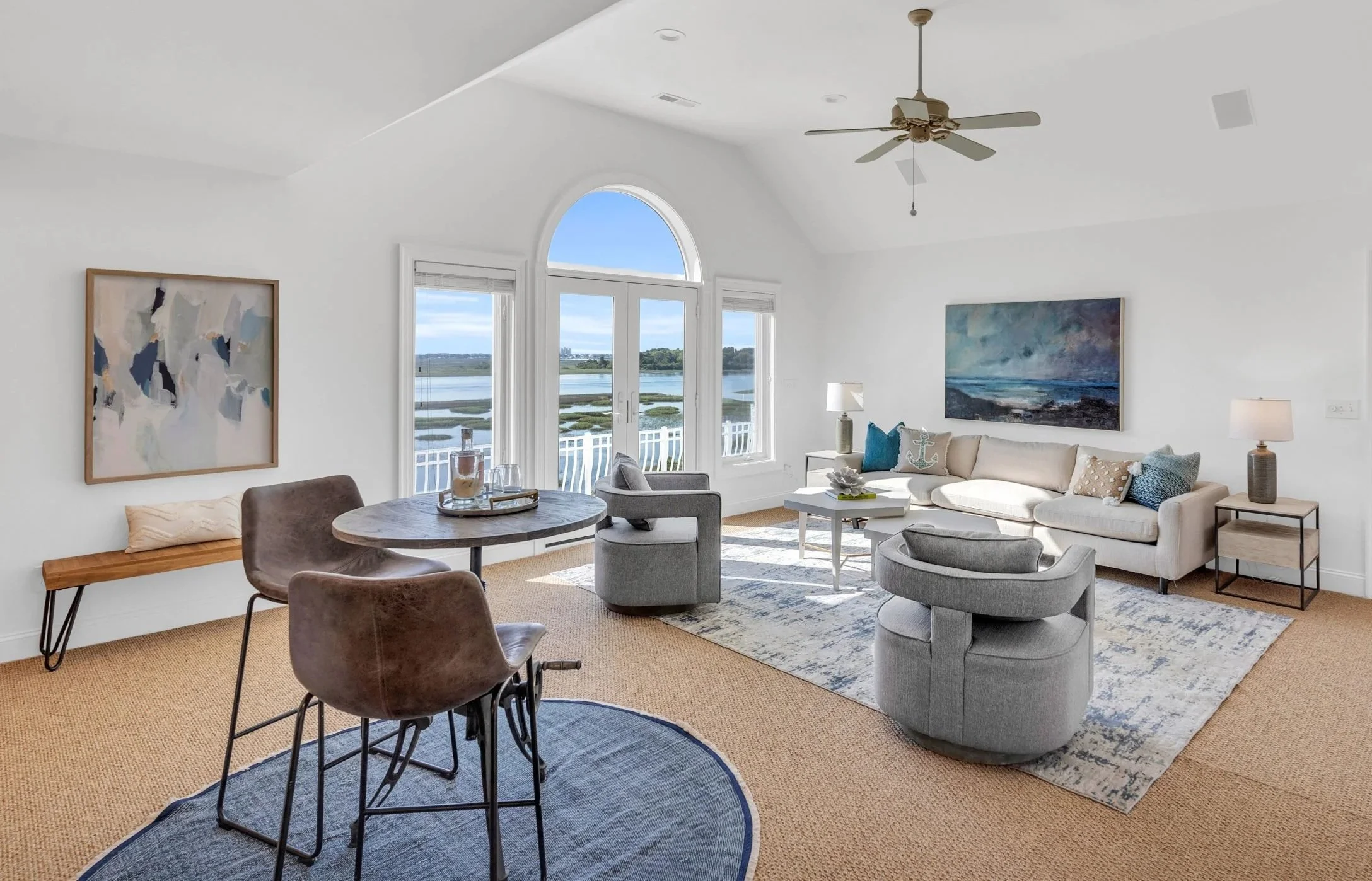
Large rooms can be a major selling point in a home but only when buyers can clearly understand how to use them. An oversized bedroom, expansive living room, or large sunroom can feel luxurious when it is thoughtfully designed. However, when it is empty or poorly furnished, buyers may see it as awkward or lacking function.
Knowing how to stage a large room is about more than simply adding more furniture. The goal is to give the space purpose, create comfortable areas within the room, and use the right scale so everything feels balanced and proportionate.
Whether you're staging a large bedroom, an open-concept living space, or a spacious sunroom, these home staging tips will help make every square foot feel intentional.
How To Determine The Purpose Of A Large Space
The first step in staging a large room is deciding how the space can be best utilized.
Before making any selections, ask: What is the purpose of this room, and how could a buyer realistically use all of this space?
Large rooms often work best when they have more than one functional area. Instead of trying to fill the entire room with one oversized furniture arrangement, create distinct zones that show buyers exactly how the room can be used.
For example:
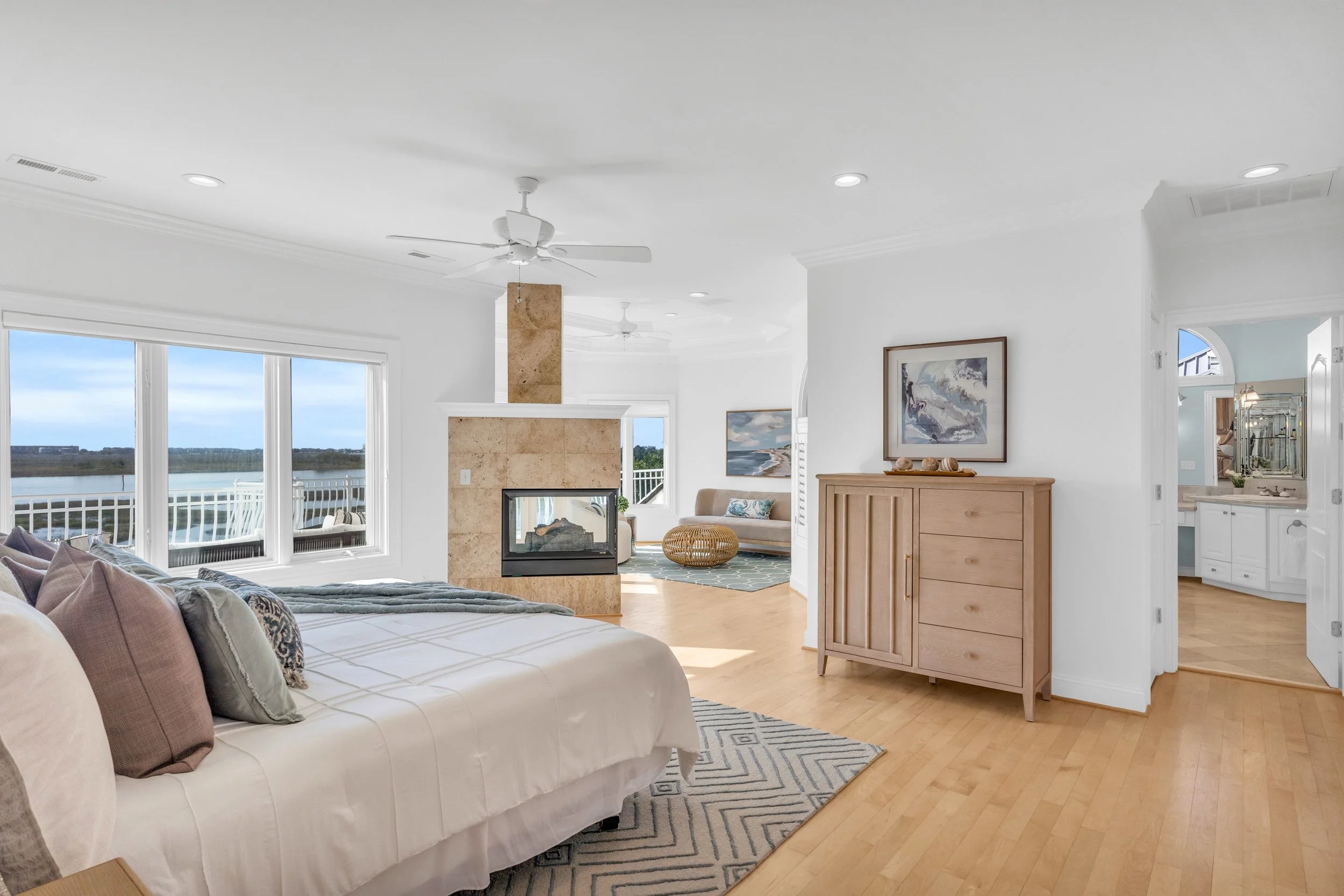
A large bedroom may have room for a sleeping area plus a comfortable seating area.
A large sunroom may function as both a casual living space and a dining area.
An oversized living room may include a main conversation area along with a reading nook or game table.
A large bonus room can be staged to demonstrate multiple possibilities, such as a lounge area and a workspace.
This is especially important when staging a vacant home. Without furniture, buyers may struggle to understand the function of an unusually large or open space. Strategic staging helps answer that question for them.
Not sure which updates are worth the investment before you sell?
Download our free guide to learn the 7 updates that are usually worth making - and 5 projects that often aren’t.
How To Create Seperate Areas In A Large Room
Once you determine how the room will function, the next step is creating zones. A large room should still feel connected, but buyers should be able to visually understand where one activity begins and another ends.
Use Area Rugs to Define Each Space
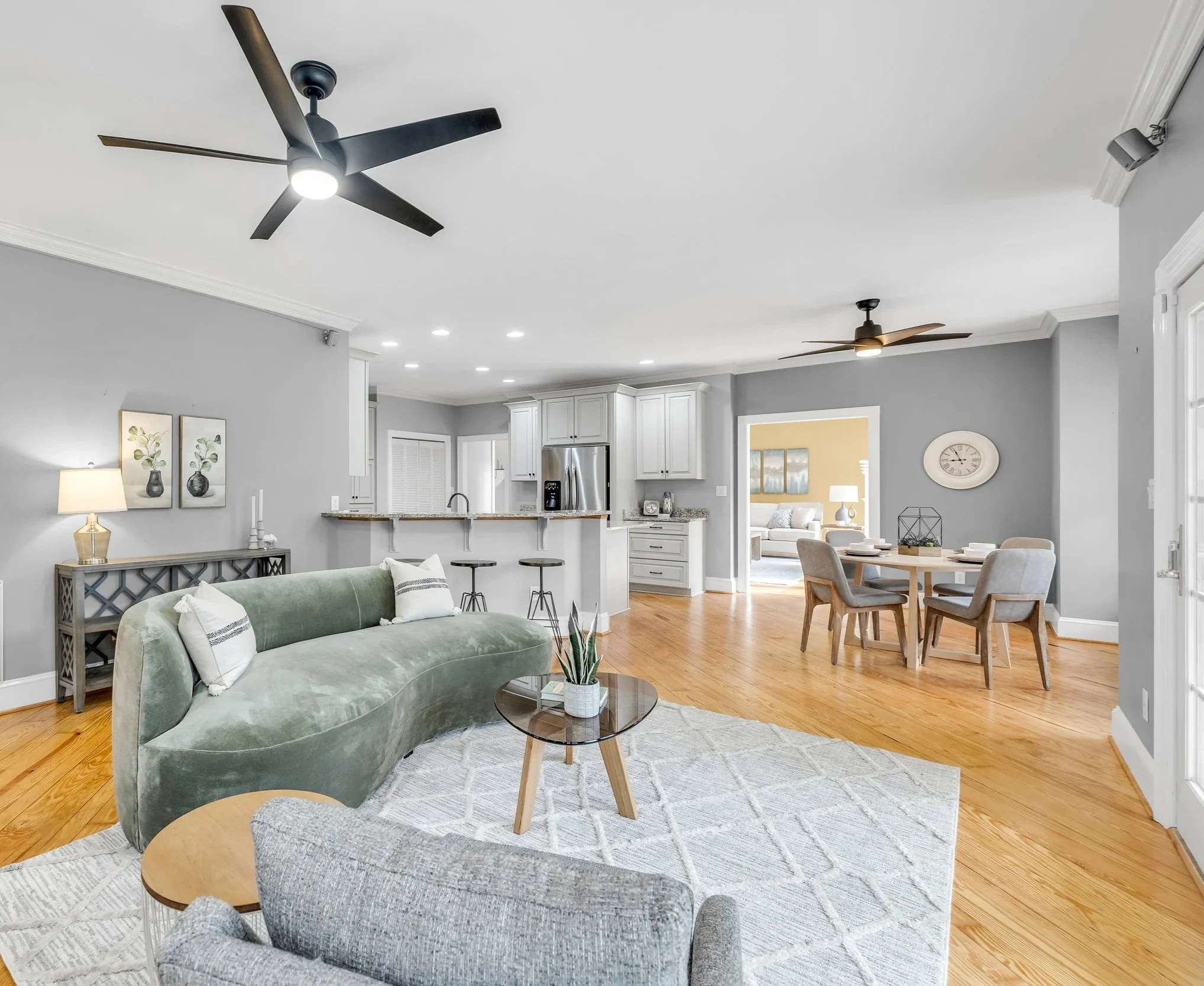
Area rugs are one of the most important ways to create separate zones in a large room. The key is to choose rugs that are large enough for the furniture they support. A rug that is too small can actually make a large room feel even more disconnected.
Arrange Furniture in Groups
Furniture placement can also help define the function of each area. Instead of pushing every piece of furniture against the walls, create purposeful groupings centered in the space. Each grouping should feel complete on its own while still contributing to the overall design of the room.
Use Furniture Placement to Create Natural Boundaries
In large open spaces, the back of a sofa can work as a subtle divider between zones. Console tables, open shelving, and accent chairs can also help visually organize the room without blocking light or interrupting the flow.
The goal is not to make each section feel like a separate room. Instead, create enough definition that buyers can easily understand how the square footage works.
How To Make Seperate Spaces Flow Together
Creating different functional areas is important, but a large room should still feel cohesive.
The best way to accomplish this is by repeating elements throughout the space. The individual zones do not need matching furniture, but they should share common denominators.
You can create flow by repeating:
Similar colors or complementary tones
Wood finishes
Metal finishes
Upholstery colors
Accent colors
Artwork styles
Shapes or textures
This creates distinction without disconnection.
When staging coastal homes and beach homes, this approach can be especially effective. Large, light-filled rooms often benefit from multiple functional areas, while a consistent color palette and layered textures help the entire space feel relaxed and connected.
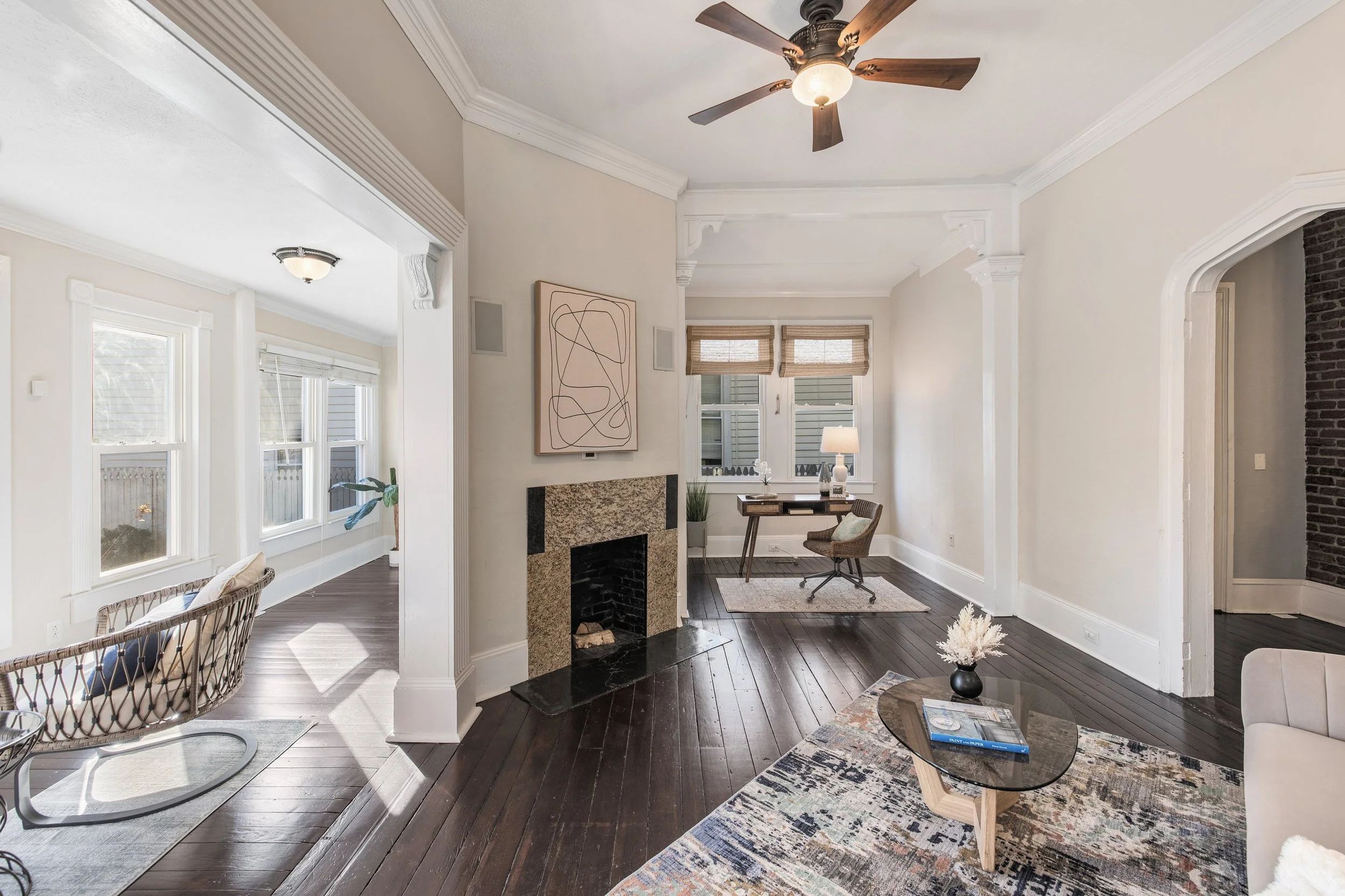
Use Larger-Scale Furniture When Staging a Large Room
One of the biggest mistakes people make when staging a large room is using furniture that is too small.
A collection of small furniture pieces can get lost in an oversized room. The result is often a space that still feels empty even when it technically contains plenty of furniture.
Large rooms require furniture that is proportionate to the architecture.
Consider using:
A sectional or a sofa and loveseat
Substantial accent chairs
An appropriately sized dining table
Larger or nesting coffee tables
Long consoles
Extra large artwork or sets of 2-3
This does not mean every piece needs to be oversized. The room still needs variation and breathing room. The goal is to create visual weight that feels appropriate for the size of the space.
When buyers walk into a large room, the furniture should help them appreciate the home's square footage, not make them wonder why the room feels so empty.
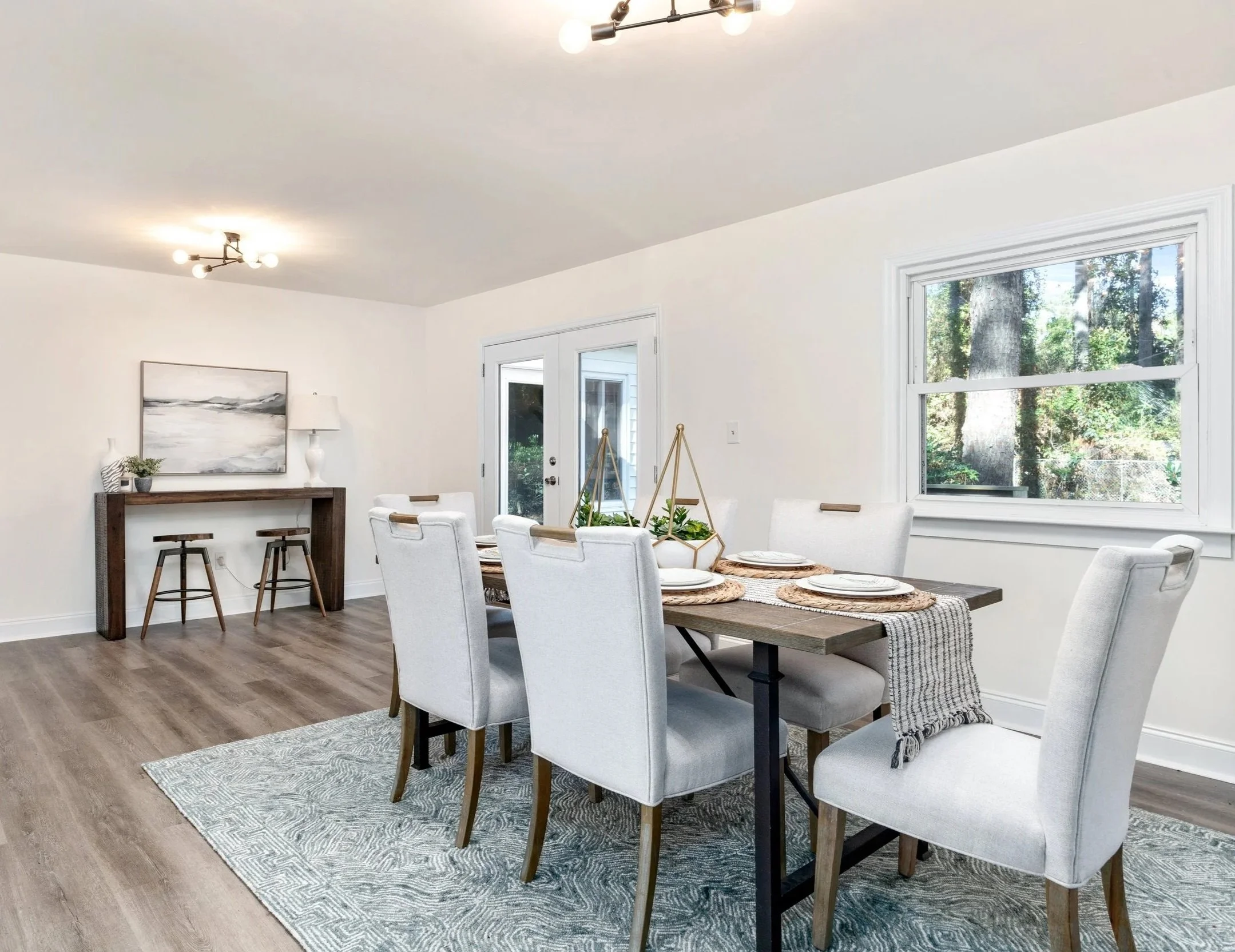
Why Professional Home Staging Matters for Large Spaces
A large room should feel like an opportunity—not a challenge. The right staging plan can define the purpose of the space, highlight its best features, and help buyers immediately understand how they can use every square foot. Let us help take the guesswork out of how to furnish and define your oversized space.
At Mickler & Co., we help homeowners and real estate professionals showcase each home's unique potential. Thoughtful staging can turn an awkward large room into one of the home's strongest selling features.
Do you have a listing with an awkwardly large room? Lets chat!
We can help with small spaces too, read Staging Tips to Make Small Spaces Appear Larger
Warmly,
Christa
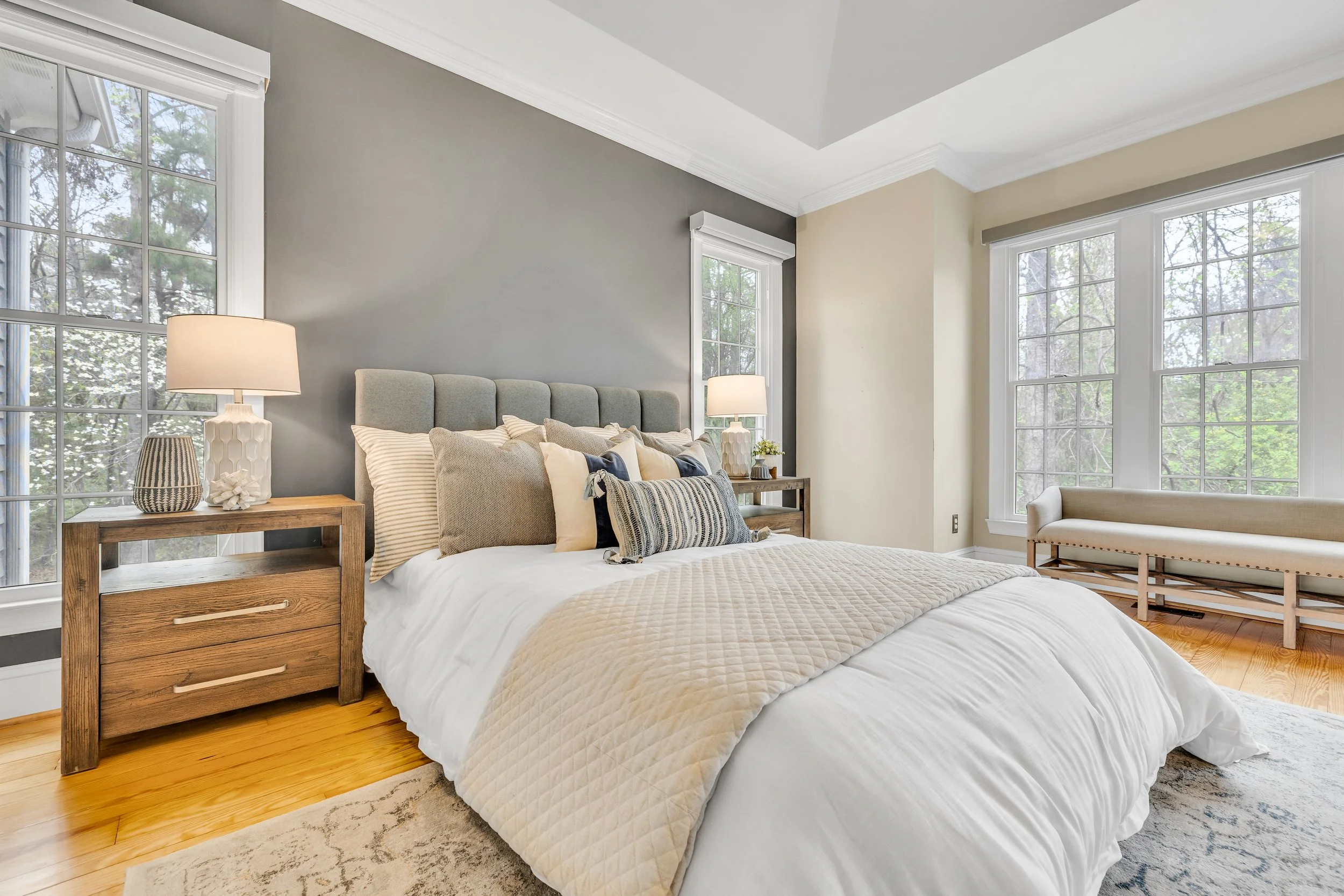
Not Local? No Problem!
Our Virtual Sellers Preparation Consultation helps you decide which updates are worth making, which projects you can skip, and how to prepare your home for sale without overspending.
FAQ’s
Q: How do you stage a room that is too big?
A: Start by determining the best function for the space. If the room is especially large, create two or more purposeful zones, such as a main seating area and a reading area. Use rugs, furniture placement, and appropriately scaled furnishings to define each space.
Q: What furniture should you use in a large room?
A: Choose furniture that is proportionate to the room's size. Larger sofas, substantial chairs, appropriately sized rugs, coffee tables, and artwork usually work better than several small pieces that get visually lost in the space.
Q: How do you divide a large room without walls?
A: You can visually divide a large room with area rugs, furniture groupings, the back of a sofa, lighting, artwork, and changes in the room's layout. The spaces should feel distinct enough to communicate their purpose while still sharing a cohesive design.
Q: How do you make a large room feel cozy?
A: Create intentional seating arrangements instead of spreading furniture too far apart. Layer the room with rugs, lighting, textiles, artwork, and accessories, while using warm and cohesive design elements to make the space feel inviting.
Q: Should you put furniture against the walls in a large room?
A: Not necessarily. In many large rooms, floating furniture away from the walls creates a more intimate and functional seating area. It can also help define zones and improve the overall flow of the space.