


Bedroom Staging Tips: 4 Ways to Impress Home Buyers
When preparing your home for sale, the primary bedroom deserves just as much attention as the living room or kitchen. Buyers want to see a space that feels comfortable, spacious, and relaxing. A bedroom that's overcrowded with furniture, filled with personal belongings, or poorly arranged can make even a generously sized room feel smaller than it actually is.
The good news? You don't need to completely redecorate your bedroom to make it more appealing to buyers. A few thoughtful changes to furniture placement, bedding, lighting, and accessories can make a big difference in how the room looks and photographs.
Here are four bedroom staging tips we use when preparing homes for sale.
Tip #1: Embrace Soft, Neutral Colors
When staging a bedroom, the goal is to create a calm, inviting space that appeals to a wide range of buyers. Soft, neutral colors are an easy way to accomplish that, but neutral doesn't have to mean boring.
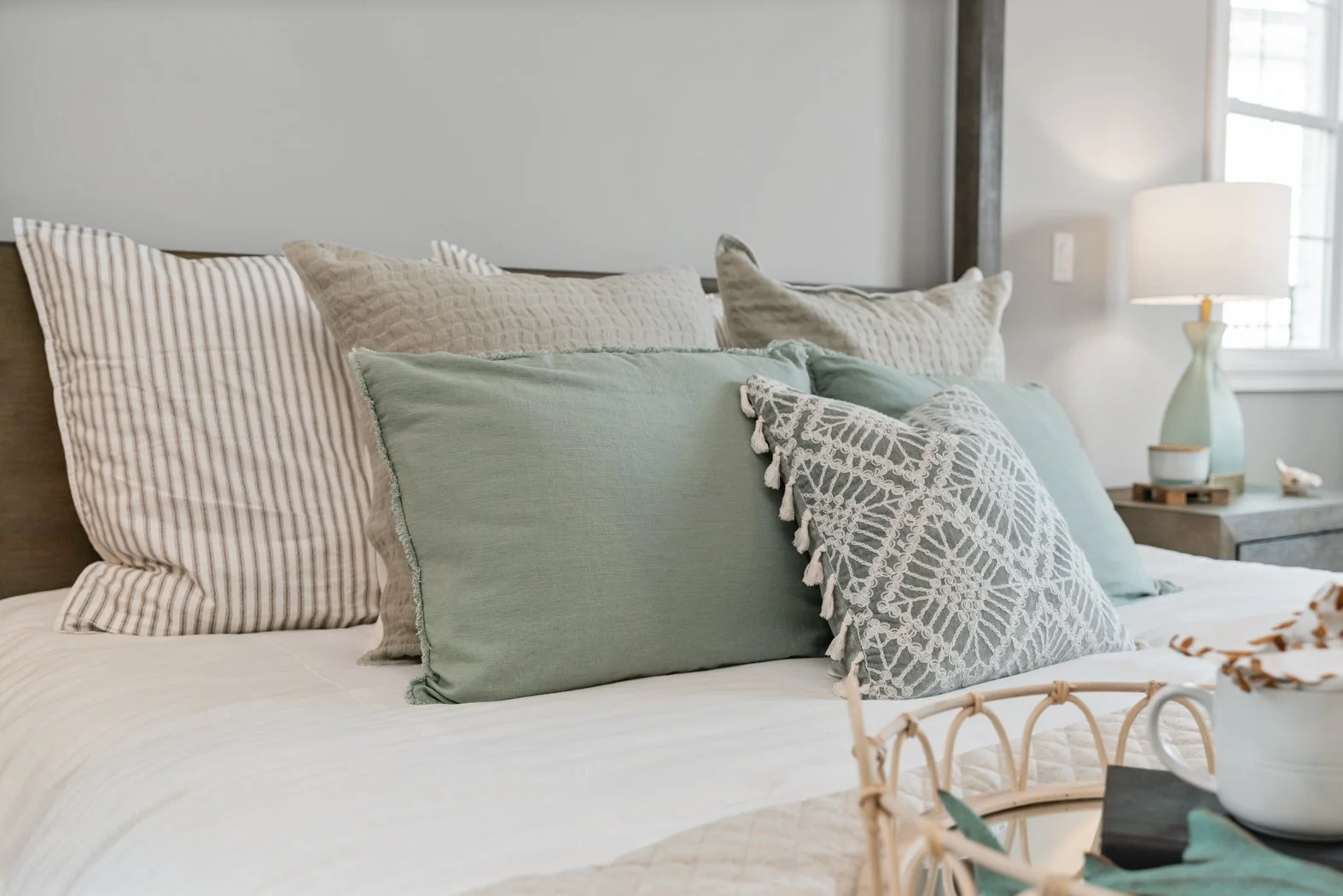
Start with the bedding. White, ivory, soft beige, and warm gray are great foundation colors. Add interest with different textures, such as a quilted coverlet, linen duvet, or a few decorative pillows. Layering textures gives the bed a finished, inviting look without relying on busy patterns or bold colors.
You can absolutely incorporate color, but use it intentionally. Muted blues, greens, and other soft earth tones work particularly well in bedrooms. The key is keeping the overall palette cohesive rather than introducing too many competing colors.
And don't feel like you need to repaint the entire room. If the existing wall color works with the furnishings and doesn't overwhelm the space, you may be able to achieve the look you want simply by updating the bedding and accessories.
Pro Tip: A bed with layered bedding almost always photographs better than one with a flat comforter and two sleeping pillows. A few well-chosen layers add dimension and make the room feel more inviting.


Not sure which updates are worth the investment before you sell?
Download our free guide to learn the 7 updates that are usually worth making - and 5 projects that often aren’t.
Tip #2: Select Minimal, Intentional Decor
One of the most common mistakes we see when staging bedrooms is leaving too many personal items and accessories on display.
Nightstands covered with books, medications, charging cords, family photographs, and everyday necessities can make a room feel cluttered, even when it's otherwise clean and organized.
When staging a bedroom, less really is more.
Clear the surfaces and add back just a few carefully selected pieces. A lamp, a small decorative object, and perhaps a book or vase are usually plenty for a nightstand. Dressers should be treated the same way.
Remove personal photographs, excess accessories, laundry baskets, and anything that doesn't contribute to the overall presentation of the room.
That doesn't mean the space should feel empty or sterile. A thoughtfully placed piece of artwork, a plant, or a textured throw can add warmth and personality without distracting buyers.
The goal is to help buyers focus on the room itself rather than the belongings of the people currently living there.
Pro Tip: Before listing photos are taken, stand in the bedroom doorway and look at the room from that perspective. If your eye is immediately drawn to clutter or a collection of small accessories, it's probably time to remove a few things.
Tip #3: Choose a Timeless Headboard and Make the Bed the Focal Point
The bed is almost always the focal point of a primary bedroom, so how it's presented matters.
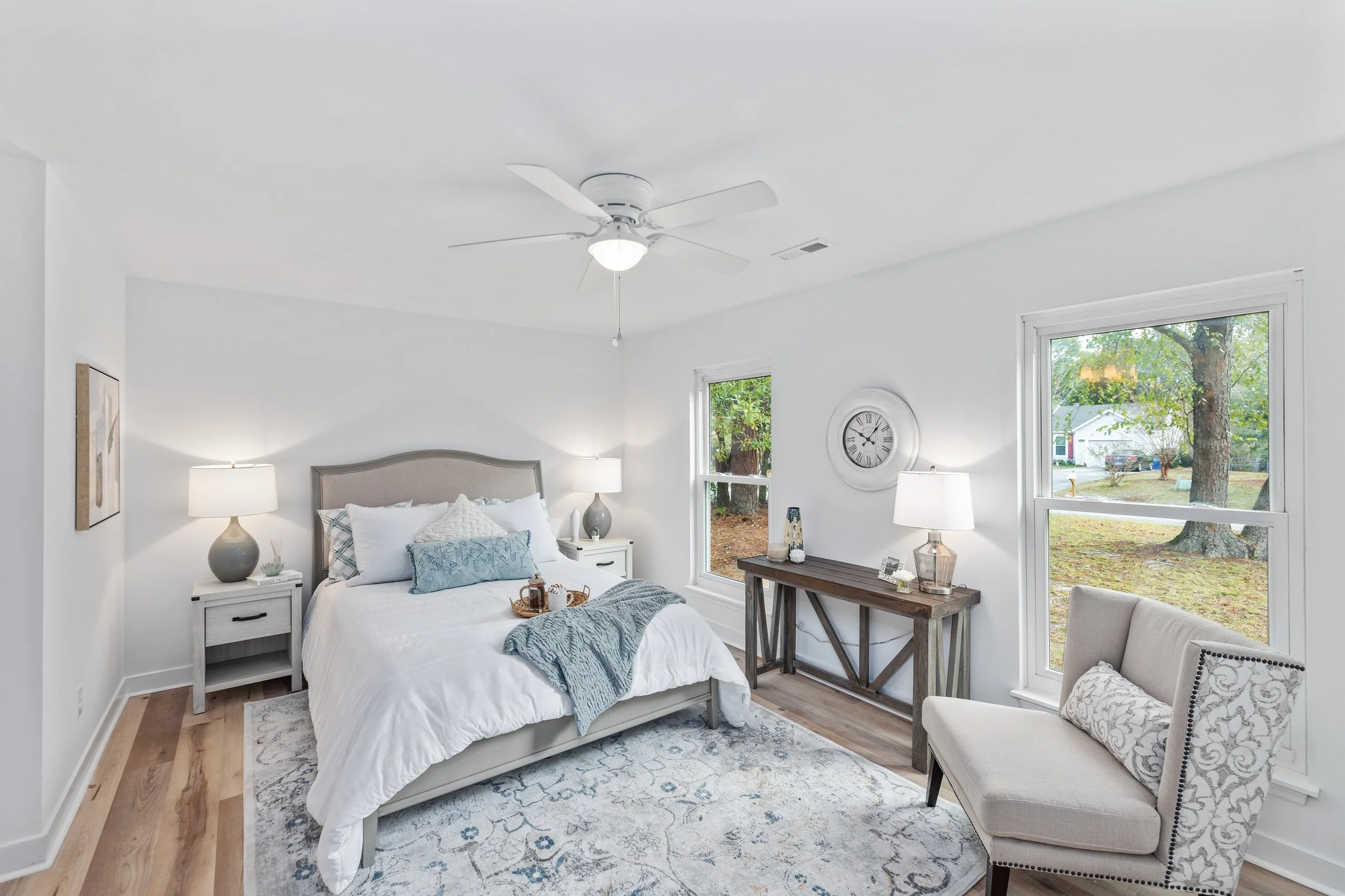
A headboard helps anchor the bed visually and gives the room a more finished appearance. Upholstered headboards are particularly effective because they add softness and texture without overwhelming the space.
If you're purchasing a headboard specifically for staging, choose something simple and timeless that works with the existing room. Avoid overly ornate designs or anything so large that it dominates the wall.
Bed placement is equally important.
Whenever possible, position the bed against a solid wall where it can be seen upon entering the room. Ideally, there should be enough space to walk comfortably around both sides of the bed.
Try to avoid placing the bed where it blocks a window, interferes with a doorway, or creates an awkward traffic pattern.
And don't underestimate the importance of lighting. Matching bedside lamps can create a sense of balance, while warm-toned bulbs make the space feel more comfortable and inviting.
Pro Tip: Make sure your bedding fits the bed properly. A comforter that's too small, flat pillows, or a bed skirt that's dragging on the floor can make an otherwise beautiful bedroom look unfinished.
Tip #4: Pay Attention to Furniture Size, Scale, and Placement
One of the biggest objectives when staging a bedroom is making sure buyers can appreciate the size and functionality of the space.
Too much furniture can make a large bedroom feel cramped, while furniture that's too small or poorly arranged can make the room feel awkward and disconnected.
Start by evaluating what actually needs to be in the room.
In most primary bedrooms, the bed and nightstands are the essential pieces. Dressers, benches, accent chairs, and other furnishings should only remain if there's enough space for them without restricting movement.
We frequently recommend removing unnecessary furniture when preparing a home for sale. Just because a room can accommodate another piece doesn't mean it should.
Pay particular attention to the space around the bed. Buyers should be able to move comfortably through the room without squeezing between furniture.
Rugs are another consideration. A properly sized area rug can anchor the bed and make the room feel more cohesive. A rug that's too small, however, can have the opposite effect.
For a king-size bed, an 8' x 10' or 9' x 12' rug often works well, depending on the room's dimensions and furniture placement. Ideally, the rug should extend beyond the sides of the bed so it doesn't disappear underneath it.
If you're staging a smaller bedroom, resist the temptation to fill every available corner. Leaving some open floor space helps the room feel larger and allows buyers to better understand its proportions.
Pro Tip: Take a few photographs of the room with your phone before making final decisions. Furniture arrangements that look fine in person can sometimes appear crowded or unbalanced in photographs. Since most buyers will see your home online before visiting in person, this is an important step.
Primary Bedroom Staging Checklist Before Listing Photos
Once you've made the larger staging adjustments, take a few minutes to address the finishing details.
Make the bed with clean, neatly layered bedding.
Fluff and arrange decorative pillows.
Remove personal photographs and unnecessary accessories.
Clear nightstands and dressers of everyday clutter.
Hide charging cords, laundry baskets, and other personal items.
Open blinds and curtains to maximize natural light.
Turn on bedside lamps and check for burned-out bulbs.
Straighten artwork and make sure rugs are positioned properly.
Remove any furniture that makes the room feel crowded.
Take a photograph from the doorway to check the overall composition.
These may seem like small details, but they're often the difference between a bedroom that looks lived-in and one that looks professionally prepared for sale.
A Well-Staged Bedroom Helps Buyers See the Possibilities
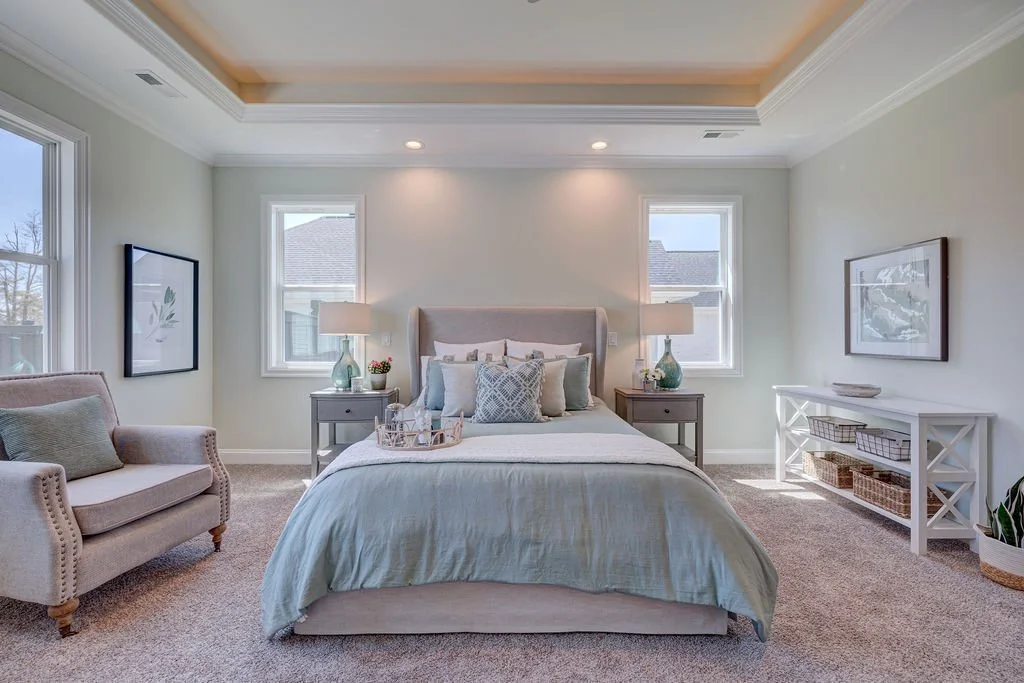
When buyers walk into a primary bedroom, they should be able to appreciate the space without being distracted by clutter, awkward furniture arrangements, or overly personal decor.
Good staging isn't about making every home look the same. It's about highlighting the best features of each room and helping buyers picture how they could use the space.
Sometimes that means removing furniture. Other times, it means rearranging what you already own, updating the bedding, or adding a few carefully chosen accessories.
At Mickler & Co., we stage homes throughout Wilmington, NC, and the surrounding coastal communities, helping homeowners and Realtors prepare properties for listing photos and showings.
If you're getting ready to sell and aren't sure which updates are worth making, professional staging can help you prioritize the changes that will have the greatest visual impact.
Learn more about our home staging services.
For more smart tips about preparing your main bedroom (and whole home) for the housing market, sign up for our newsletter.
Warmly,
Christa