

Common Home Staging Errors and How We Expertly Avoid Them

When preparing a home for sale in or around Wilmington, NC, many sellers feel uncertain about what truly makes a difference in staging an empty space. Vacant homes present unique challenges, and avoiding common staging mistakes is essential to creating an inviting environment that appeals to buyers and helps a property sell quickly.
Below are some of the most frequent staging errors in vacant homes and how to avoid them to maximize your home’s market impact.
Error #1. Overcrowding or Misjudging Scale
One of the most common mistakes in vacant home staging is misjudging the scale of furniture and accessories. Rooms that are left completely empty can feel small and hard to visualize, while oversized or undersized pieces disrupt the visual balance of the space.
Proper home staging requires selecting furnishings that are proportionate to the room’s dimensions. The right scale enhances architectural features, defines the function of each space, and allows buyers to clearly envision how they would live in the home.
Not sure which updates are worth the investment before you sell?
Download our free guide to learn the 7 updates that are usually worth making - and 5 projects that often aren’t.
Error #2. Disrupted Traffic Flow
Furniture placement directly affects how a space feels and functions. Poorly arranged layouts can block natural pathways, make rooms feel cramped, or create awkward transitions between areas.
Effective staging establishes clear, intuitive traffic flow. Thoughtful furniture placement highlights focal points, guides buyers naturally from room to room, and ensures that each space feels open and easy to navigate.

Error #3. Choosing the Wrong Color Palette
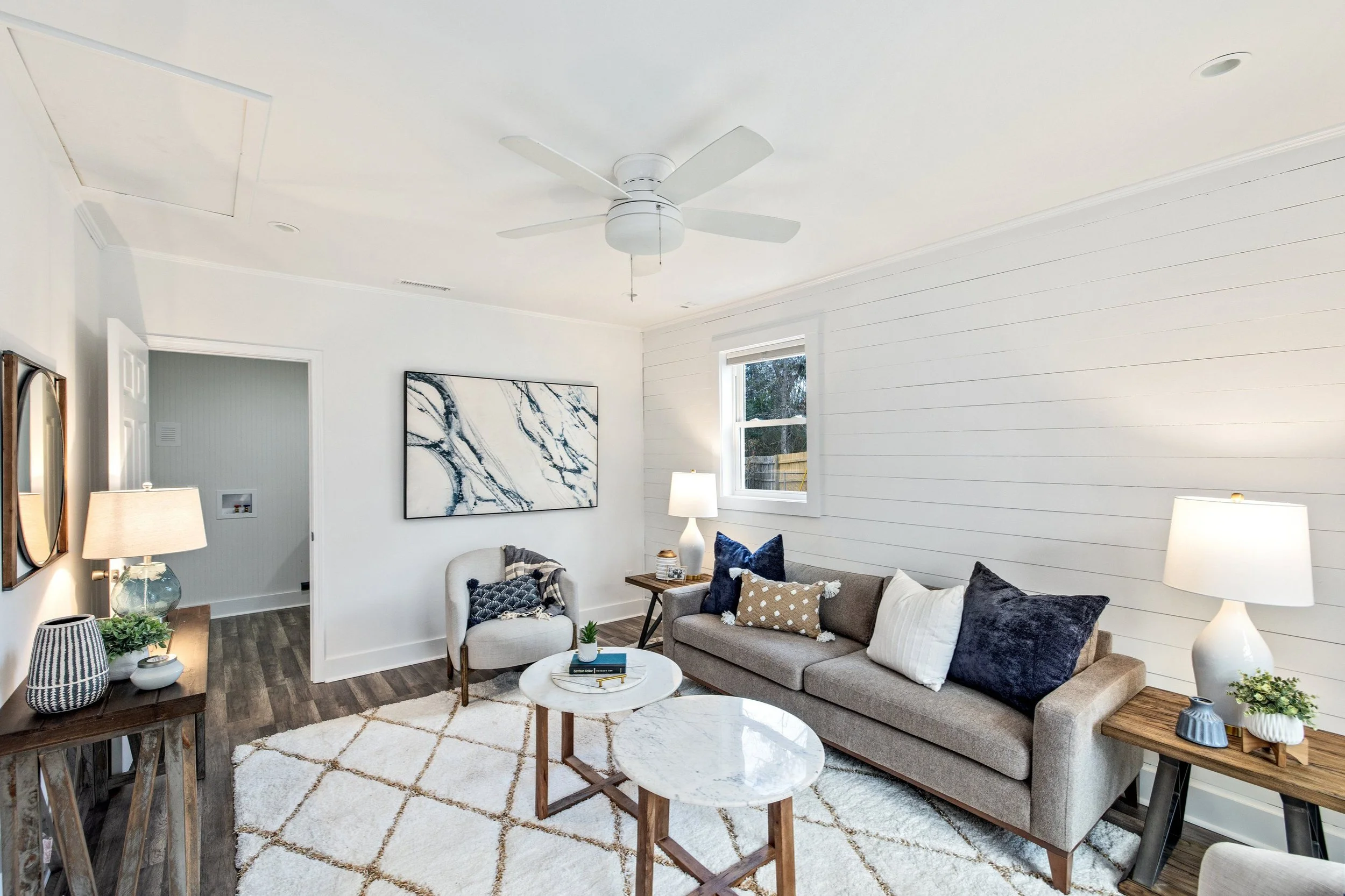
Color plays a critical role in shaping buyers’ first impressions. While walls are often painted in neutral tones, furniture and accessories must also complement the home’s finishes, lighting, and overall style.
A cohesive, neutral palette appeals to a broad audience and creates a fresh, welcoming atmosphere. Subtle layers of texture and tone add interest without overwhelming the space, allowing buyers to imagine their own furnishings and décor.
Error #4. Underestimating Lighting
Lighting is often overlooked in vacant homes, yet it significantly impacts how a property is perceived. Dim or poorly lit spaces can feel smaller, dull, and less inviting.
Layered lighting such as ambient, task, and accent sources adds warmth and depth. Strategically placed lamps and updated fixtures enhance natural light, highlight architectural details, and create a polished, move-in-ready appearance.

Error #5. Minimalist Staging That Feels Cold
While minimalism is common in vacant staging, going too sparse can make a home feel sterile or uninviting. Buyers connect emotionally with spaces that feel comfortable and livable.
Balanced staging incorporates carefully chosen furniture, soft textiles, artwork, and accessories to create warmth without clutter. Thoughtful selections add dimension and comfort while maintaining a clean, market-ready look.

Vacant home staging in Wilmington, Leland, Hampstead, and surrounding eastern Carolina beach communities is about more than simply filling a space, it’s about creating clarity, balance, and emotional appeal. When scale, flow, color, and lighting are carefully considered, a vacant property transforms into a welcoming home that resonates with buyers and stands out in the market.
If you’re ready to avoid these common pitfalls and stage your vacant home for success, let’s connect. Together, we’ll stage a Wilmington home that sells.
Warmly,
Christa